Skip to content

Books - 3. page

Priorities and Focus

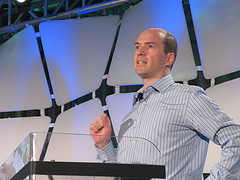
ben horowitz photo
Photo by TCDisrupt

I enjoyed Ben Horowitz’s ‘The Hard Thing about Hard Things’.  It was an in depth view of the lonely life of a CEO going through hard hard times.  I was only recently out of school when the dotcom bust happened, but I still remember layoffs–the company where I worked was going to be huge! “offices in Singapore and London!” until it wasn’t–which happened the week before Thanksgiving.

I cannot imagine what it was like to be in upper management in those times.

Must have been pretty wretched.

My favorite part of the book, though, is this section:

One very hot day my father came over for a visit. We could not afford air-conditioning, and all three children were crying as my father and I sat there sweating in the 105-degree heat.


My father turned to me and said, “Son, do you know what’s cheap?”


Since I had absolutely no idea what he was talking about, I replied, “No, what?”


“Flowers. Flowers are really cheap. But do you know what’s expensive?” he asked.


Again, I replied, “No, what?”


He said, “Divorce.”


Something about that joke, which was not really a joke, made me realize that I had run out of time. Up until that point, I had not really made any serious choices. I felt like I had unlimited bandwidth and could do everything in life that I wanted to do simultaneously. But his joke made it suddenly clear that by continuing on the course I was on, I might lose my family. By doing everything, I would fail at the most important thing. It was the first time that I forced myself to look at the world through priorities that were not purely my own. I thought that I could pursue my career, all my interests, and build my family. More important, I always thought about myself first. When you are part of a family or part of a group, that kind of thinking can get you into trouble, and I was in deep trouble. In my mind, I was confident that I was a good person and not selfish, but my actions said otherwise. I had to stop being a boy and become a man. I had to put first things first. I had to consider the people who I cared about most before considering myself.

It’s a beautiful vignette.

As a father with a lot of interests, this really resonated with me. Kids (or, I imagine, other major challenges such as a sick relative) take so much time that they force you to re-evaluate everything and think about your priorities and life focus.

My Book Writing Process

writing photo
Photo by mrsdkrebs

I wrote an ebook last fall. It’s about the Cordova command line tool (Cordova CLI). Cordova is a way for web developers to build mobile apps that are distributed via the various app stores and can access app fucntionality (your list of contacts, for instance). The CLI is the main method of interacting with Cordova–managing your files, building apps, etc. It’s a niche, but one that I felt passionately about. I love the command line and I love webapps. I find the whole native app experience distasteful. (“Didn’t we already watch this movie?”)

I thought I’d share some lessons from this experience. This post will be about the writing, the next one about the marketing, and the final one about the results.

I wrote a series of blog posts, gathered here, to determine if I would enjoy writing a book, and to give me a head start on the content. Those blog posts were primarily written in July when my wife was away visiting family. I figured that if I didn’t want to write the book, the blog posts would have value anyway–writing clarifies issues for me. If they were useful and shared, then I would have some market validation.

On August 1, weeks after publishing my first Cordova blog post, I received an email from a reader who said the posts were useful, and asked a question. This was enough validation that I decided to start the book. It was five weeks from creating the project on leanpub to completing it (late August to early October).

During the book writing, I focused on expanding on the blog posts to make sure they were authoritative, adding new content as I came up with questions, and verifying all the claims using the Cordova software. I remember spending an hour trying to confirm one part of one sentence in the book. I also spent time answering and asking questions on the Cordova/Phonegap Google group. I also monitored the Cordova developer list, more for interesting topics than for dialog. And a new version of Cordova (3.1) was released just a week or so before I was done with the book, so I spent some time double checking how the new version of the CLI worked.

As far as time, I averaged an hour a day for that five week period–remember, a good chunk of the content was already written and I was simply revising it. I found time on the weekends and in the early morning.

I ended up finding a flickr image to use for the cover page–thanks Marc!

In the end, the writing was fun and a grind all at the same time. You just have to make the time.

Giving books as gifts

book photo
Photo by shutterhacks

A few years ago one of my contracting clients gave me a book for a Christmas gift. It was a thoughtful gesture. It mattered all the more that I received it from a client who I’d spent a lot of time working for and who I know had spent a lot of time thinking about some of the issues the book raised. I read the book, and applied its lessons to my life, both business and personal.

Since then, I’ve given and received books to business colleagues and clients. Books are a unique gift because they convey a message in a way that few other gifts do. A book is a more committing gift than a visa gift card or a piece of electronic equipment (both gifts I’ve also received and was thankful for). You are asking for the receiver’s time and focus, and making a statement that the gift is worthy of both of those. You’re also making the statement that the recipient will benefit from the book. It’s a gift that actually has some demands (a bit like giving a gym membership, without as much judgement).

When you are giving a book, you’re giving a new idea. You are saying you were touched or changed by this book, and you hope that the recipient will find the same idea. You also need to understand the receiver–will they find the same benefit? Have they already tuned into the ideas so it will deepen their understanding? Is this a new perspective for them?

Bonus! If you set giving worthy books as a goal, it will make you read more books. It also has the beneficial side effect of forcing you to evaluate books you read from the perspective of ‘would I want to give this as a gift?’. Not every book has to meet that criteria, just as not every meal should be broccoli and yogurt, but it is a useful filter if you have limited reading time.

I hope I’ve convinced you to try giving books to your clients, colleagues, bosses and employees. The easiest way to start is to find a solid business book that you’ve enjoyed reading (‘Getting to Yes’ and ‘The Personal MBA’ are two candidates) and sending it to someone you have worked with for a while. Then, start a list and add any other books that resonate with you. When the holidays come around, you’ll have a list to choose from. Start small because of this higher bar this sets–you’re not just asking for a ‘Thank You’ and a place on a shelf, you’re asking for time and focus.  And those are precious.

Leanpub ebook: Developing Cross Platform Mobile Applications with Cordova CLI

I took the content from my blog posts about Cordova CLI, and am revising and updating it for an ebook about Developing Cross Platform Mobile Applications with Cordova CLI. I discuss some of the intricacies of Cordova CLI in more depth than either in my blog posts or in the Cordova documentation.

If the topic interests you, I’d love to hear your feedback.

Plus this gives me a chance to use Leanpub, which I’ve written about previously.

Google Analytics Goals and Forms on Google Sites

I recently put together a website for my father’s new book about World War II, and choosing Google Sites was a slam dunk.  I choose a neutral theme, set up a few pages, uploaded some images and logged into Go Daddy (where my father had purchased his domain name) and set up DNS.  Easy peasy.

Two issues came up.  One minor and one major.

First, there is no easy way to point the bare domain at google sites using Go Daddy’s tools.  So seesaw1942.com can’t be redirected to www.seesaw1942.com.  Minor bummer, but just make sure all the marketing contains www.seesaw1942.com

I set up a form to capture email addresses for people who wanted to be informed when the book was actually published (it is now!).  I was interested in playing around with PPC to drive people to the website, but wasn’t able to set up a goal in Google Analytics to measure signup success.  (So I didn’t end up setting up PPC.)

I looked around and didn’t find anything that would help with this.  Here’s an article about goals and Google Forms, but the writer’s form lives on their own server, which gives them more latitude than someone working with Google Sites.

Anyone have any idea how to do this?

Leanpub: write a ‘lean book’

Ever wanted to write a book?  Me too!

Leanpub lets you write a book, but with a twist.  They’ve built a system where you can write portions of a book, and easily publish to the major ebook formats (PDF, .mobi, epub).  You write the book with Markdown, and can include code samples, images, tables, and sections.  Nothing really new there, though.

The revolutionary idea of Leanpub, and the reason it is ‘lean’, is that you can build your book piece by piece, and sell it whenever you have ‘minimum viable content’.  (You can also include sample content to let people see what they are buying.)  Once someone purchases your book, they receive all further updates.  This type of interaction with users can be very helpful–it spurs you on to finish your book (after all, someone paid for it) and also lets you know if your book idea has traction in the marketplace (did anyone buy the book), and builds an audience for your book slowly over time (going to a publisher with a list of people who’ve already bought your book is a lot stronger than going there with a first draft).

After you finish your book, you can submit it to all the other epublishing vendors (Amazon, B&N, etc) or a print on demand store.  (They also have support for building a book directly out of a blog, if you have written anything that structured.)

I have built 4 books on Leanpub.  Using CakePHP to generate Markdown, I was able to combine some articles about CSA I had written with a directory of relevant farms.  You can see the Denver guide.  I found the process fun, if not lucrative.

This is a great concept.  It really makes you, the author, focus on two areas of publishing that technology can’t help with: writing and marketing.  The best book in the world won’t have any sales if people don’t find it, and the most promoted book won’t sell if you don’t write it.

I did see some minor issues around footnoting, and not everyone will enjoy writing in plain text and ‘compiling’ the book to PDF (a process that takes around 30 seconds each time you do it), but the platform seems to be evolving (one of the founders is pretty active in the support google group).  All in all I think Leanpub is worth a look, especially if you are writing a book where a chapter or two will save people time in their job.

If you want to know more about lean publishing ideas, check out the manifesto.

“Thinking in Systems” by Donella H. Meadows

I recently finished “Thinking in Systems” by Donella H. Meadows.  A primer on systems theory, this book is a very accessible introduction to these structures that influence so much of our ecology, economy and lives.

The book is only seven chapters and around 200 pages long, but covers a lot of ground.  First, she covers the basics of systems, including stocks (the thing that changes over time, like water in a bathtub or money in a bank account), flows (the movement of stocks, like a drain in a bathtub or wages deposited into a bank account) and various kinds of feedback loops (the things that act on a stock, like a thermostat monitoring bathtub temperature–a balancing loop, or interest in a bank account–a reinforcing loop).  Then she spends some time examining the some members of the systems ‘zoo’, by varying the type and number of stocks and feedback loops, and observing behaviors that arise.

She then dives a bit deeper into this behavior, and examines why systems are stable, and at the same time what kind of surprises arise from them.  She also looks at some of the archetypes of problematic systems, like the tragedy of the commons, escalation and addiction, and proposes some ways to avoid these archetypes or how to withdraw from them.  She starts off each archetype with an example drawn from the newspaper headlines when she was writing (in the 1990s).

The next chapter enumerates change points–where can you or I intervene to most effectively use our time to modify systesm we find abhorrent or unfair or wrong.  The author discusses twelve different areas to apply energy, ranging in effectiveness from changing numbers or parameters in the system, like the tax rates and the level of the minimum wage (minimal effectiveness), to transcending paradigms (maximal effectiveness).  She calls the list order “slithery” and acknowledges that this is a first draft and that points of leverage can increase or decrease in effectiveness depending on many factors.  But even having such a list is extremely useful as a starting point to think about change.

The last chapter is all about lessons from systems, of which my favorite is “Stay Humble–Stay a Learner” where she quotes a psychologist taking about the difficulty of becoming an error-embracer; we don’t just have to accept that we make mistakes, we have to admit them.

After a slow start, I really enjoyed this book.  The examples were accessible and grounded in the real world.  And she explained complicated ideas in ways that made me wonder why I hadn’t thought of it like that before–always the hallmark of a challenging and worthwhile book.  The author wrote “Limits To Growth” in the 1970s, so there are definitely progressive undertones throughout the book, but nothing over the top.

This book is a great way to get a gentle introduction into systems thinking, which is a fundamental way of understanding the world.  It’s not going to give you any easy answers, but will give you one more tool in your mental toolbox to understand the problems of the world.  I wish she had had a small section of exercises at the end, because they would have offered a deeper understanding of systems with some hands on work, but other than that, I have no quibbles.

Two books of interest to freelancers

I recently read two finance books that might be of interest to freelancers.

The first is The Money Book For Freelancers, Part-Timers, and the Self-Employed by Joseph D’Agnese and Denise Kiernan.  I was pleasantly surprised to see a finance book aimed directly at people with sporadic income.  This book is written in an easy going style, with examples drawn from the author’s lives, as well as those of their friends.

The major takeaway is that you should pay yourself first–when a check comes in, allocate a percentage for taxes, a percentage for retirement, and a percentage for an emergency fund.  Do that first, so you aren’t even tempted to spend it.  I do this because of my corporate structure and SIMPLE IRA, but if you’re a new freelancer, or someone who is a schedule C worker, then it’s great advice.

Then, after a while, when you’re comfortable with the system, you can start to save for other goals.  One of the strongest parts of the book was when they encouraged you to sit down and write out your particular financial goals.  It’s tough to do, because when you do so, then you’re confronted with the hard work of trying to achieve them, but it’s great advice.

While this book was full of tips for dealing with the income side, I felt like the outgo side was covered as well.  They had advice about breaking up your expenses into required (taxes, retirement, emergency), overhead (rent/mortgage, food, insurance), and variable (eating out, classes).  Once you know your overhead and required expenses, if you get a windfall (that big client finally paid!) you can siphon that off into a separate account and use that for future months of expenses.  The authors also did a good job talking nuts and bolts, going down to the details of what type of bank accounts you need.

They didn’t really cover some things that are on the periphery of financial concerns–corporate structure, handling employees and contractors and types of insurance, for instance.  But doing so would probably have distracted from the main point of the book, so I understand.

If you’re a freelancer, and this strategy doesn’t work for you, you probably want to check this book out.

I also read Are you a Stock or a Bond by Moshe A. Milevsky.  This book is a fascinating look at the best way for modern savers with 401(k)s and IRAs to replicate what the WWII generation had–a pension.

The hook of the book is that savers should consider their lifetime earning potential and job prospects when planning a retirement asset allocation strategy.  Those who are in a more stable job (the author uses himself as an example–a tenured professor) should consider their earnings more bond-like and thus invest more in stocks (to the point of borrowing to buy stocks).  Those in a more tenuous job (farmer? I don’t remember his example) should do the opposite.

The hook, while thought provoking, is not really the focus of the book.  In fact, I was a bit disappointed that he didn’t spend more time telling you how to determine if your income stream was more stock like or more bond like.  Instead, he charges off into what you should do with your accumulated savings when you retire.

The short answer–buy an annuity.  The reason for this is that the guaranteed income from an annuity is impossible to replicate from the same amount of capital invested individually.  Why?  Because an annuity spreads payments across a population in which some will die before others.  Annuities essentially transfer wealth from those who die early to those who die later.  This asset class reduces your greatest financial risk at retirement–running out of money.  Just like a pension.

Definitely a thought provoking book, and one that would be especially useful to people approaching retirement.

On writing a book

I saw this great post on the nuts and bolts of writing a book on the BJUG mailing list. Well worth a read.

I have sympathy in particular with his ‘writing schedule’ comment. I started to put together a book with some friends, and it was hard to keep things moving. We ended up not moving forward with the book and placing the content on a blog (which has proven hard to update as well). The book was about software contracting.

[tags]authorship,inertia[/tags]